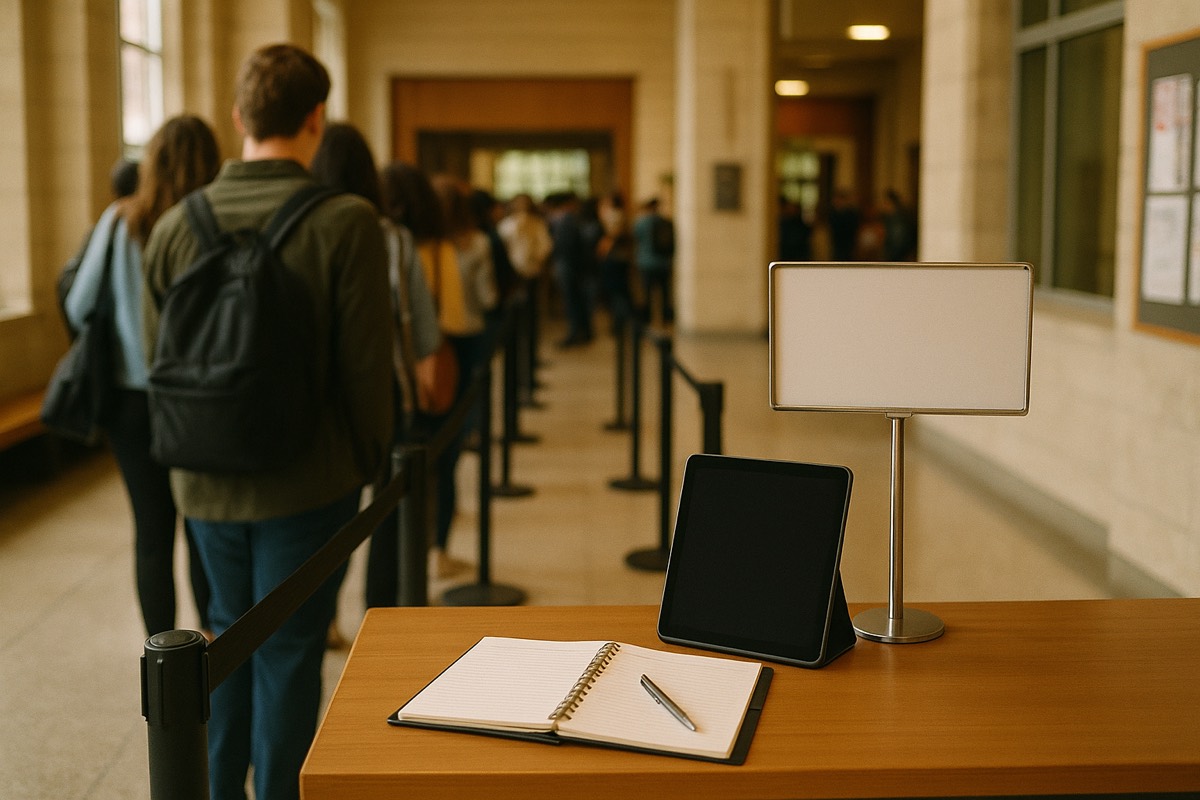
The Complex Reality of Event Venue Queue Management
Managing queues at events is fundamentally different from traditional service businesses. Unlike restaurants or retail stores where customers typically enter one queue at a time, events create a perfect storm of simultaneous, interconnected waiting experiences. A single guest at a conference might encounter registration check-in, coffee service, lunch lines, merchandise stands, and session entry queues—all within a few hours.
For wedding venues, the stakes are even higher—couples spend an average of $35,000 on their special day, and poorly managed queues can turn dream celebrations into stressful experiences.
Event venue operators face unique challenges that require sophisticated queue management best practices adapted specifically for the multi-queue, time-sensitive nature of large gatherings.
The Registration Rush: First Impressions Matter
Registration and check-in represent the first queue experience for event attendees, setting the tone for the entire event.
Convention centers like the Orange County Convention Center in Orlando have revolutionized their approach by implementing pre-registration systems combined with mobile check-in options. Their data shows a 45% reduction in peak queue times and a 78% increase in attendee satisfaction scores for the registration process.
Key strategies for registration queue management include:
- Alphabetical lane assignment: Divide registration into multiple lanes based on last name ranges (A-E, F-K, etc.)
- VIP and speaker fast-tracks: Separate queues for premium attendees reduce bottlenecks
- Pre-event packet pickup: Offer materials collection 24-48 hours before the main event
- Digital badge printing: On-demand badge creation eliminates pre-sorting and lost materials
Food Service: The Hunger Games
Catering queues at events present unique challenges due to concentrated demand periods. Unlike restaurants with steady customer flow, events create simultaneous hunger across hundreds or thousands of attendees.
The National Restaurant Association found that event catering operations experience 300% higher peak demand compared to regular food service, making queue management critical for both guest satisfaction and food safety.
Successful venues implement multiple strategies:
Staggered service timing: The Gaylord National Resort schedules conference breaks and meal periods based on session attendance, preventing the "thousand-person lunch rush." They report 35% shorter wait times through strategic scheduling.
Multiple serving stations: Rather than single buffet lines, successful venues create identical food stations throughout the space. The Colorado Convention Center uses this approach for events over 500 people, reducing average wait times from 18 minutes to 7 minutes.
Menu engineering for speed: Simple, pre-portioned items move faster than complex, made-to-order options. Wedding venues often offer "action stations" with items like pasta or carving stations that can serve multiple guests simultaneously.
Merchandise and Vendor Queues
Conference exhibition halls and wedding favor stations create additional queue complexity. These queues are often discretionary but highly valuable for revenue generation and attendee engagement.
Data from Trade Show Executive Magazine indicates that well-managed vendor queues increase average spending per attendee by 23% compared to poorly managed exhibition areas.
Digital Queue Management Systems
Modern event venues increasingly rely on digital solutions to coordinate multiple simultaneous queues. The Moscone Center in San Francisco implemented a comprehensive digital queue management system that reduced overall wait times by 41% across all venue services.
Key technology components include:
Centralized queue monitoring: Dashboard systems that provide real-time visibility into all active queues, allowing staff to redirect resources as needed.
Mobile queue joining: Apps that allow attendees to join queues remotely, particularly useful for sessions with limited seating or popular vendor booths.
Predictive analytics: Systems that forecast queue formation based on event schedules, historical data, and current attendance patterns.
RFID and Badge Integration
Radio-frequency identification (RFID) technology embedded in event badges enables seamless queue management across multiple touchpoints. The Las Vegas Convention Center's implementation of RFID-enabled badges reduced check-in times by 60% and provided valuable data on attendee movement patterns.
Benefits of RFID integration:
- Automatic queue joining for sessions and meals
- Real-time capacity monitoring for fire safety compliance
- Personalized recommendations based on queue behavior
- Fraud prevention for paid events or premium services
For venues considering technology implementation, RFID systems typically require 6-8 weeks of setup time and cost between $2-5 per badge, but deliver ROI through improved efficiency and reduced staffing needs.
The Dynamic Staffing Model
Unlike traditional service businesses with predictable busy periods, events create concentrated demand that requires flexible staffing approaches. Research from HospitalityNet shows that events typically experience 80% of their total queue volume within 20% of the event duration.
Successful venues implement dynamic staffing models:
Cross-trained team members: Staff trained in multiple roles can move between registration, catering, and crowd control as queues develop. The Phoenix Convention Center maintains a "flex team" of 15-20 cross-trained employees for every major event.
Volunteer coordination: Many events utilize volunteers, but managing volunteer-led queues requires specific protocols. The Austin Convention Center has developed a volunteer training program that reduces queue-related issues by 55% compared to untrained volunteer management.
Third-party specialists: For complex events, partnering with specialized queue management companies can provide expertise and additional personnel. Companies like EventTemp and Encore specialize in event staffing with queue management focus.
Training for Multi-Queue Environments
Staff training for event venues must address the unique challenges of managing multiple, simultaneous queues. Effective training programs focus on:
- Situational awareness: Staff must understand how actions in one queue affect others
- Communication protocols: Clear channels for reporting queue issues and requesting assistance
- De-escalation techniques: Managing frustrated guests who have experienced multiple waits
- Technology proficiency: Using queue management systems, mobile apps, and communication tools
Conference and Convention Centers
Business events present unique queue challenges due to tight schedules and professional expectations. The International Association of Conference Centres identifies queue management as the second-most important factor in overall event satisfaction, after content quality.
Convention center best practices:
Session-based queue prediction: Popular speakers or trending topics create predictable queue surges. The Jacob K. Javits Convention Center in New York uses historical session attendance data to pre-position staff and set up overflow queues for high-demand presentations.
Networking break optimization: Strategic placement of coffee stations and networking areas prevents lobby congestion. The Walter E. Washington Convention Center increased networking satisfaction scores by 34% through optimized queue placement during breaks.
Exhibition hall flow management: Vendor booths create natural queue points that can disrupt overall traffic flow. Successful convention centers work with exhibitors to design booth layouts that minimize queue interference with main aisles.
Wedding and Event Venues
Wedding venues face the unique challenge of managing queues for events where emotions run high and expectations are maximum. The WeddingWire Newlywed Report shows that 89% of couples cite "smooth event flow" as their top priority, making queue management crucial for venue reputation.
Wedding venue strategies:
Cocktail hour queue distribution: Multiple bar stations prevent long waits during cocktail hour. Venues like The Broadmoor in Colorado Springs use the "triangle rule"—no guest should be more than 30 steps from a service point during cocktail hour.
Reception line alternatives: Traditional receiving lines create bottlenecks and guest frustration. Modern venues suggest table visits during dinner service or cocktail-style mingling to eliminate formal queue requirements.
Vendor coordination protocols: Wedding venues must coordinate queues for photographers, caterers, and other service providers. The Ritz-Carlton has developed vendor queue protocols that reduce setup conflicts by 67% through scheduled access times.
Queue-Specific Metrics
Effective queue management requires measurement and continuous improvement. Event venues should track multiple KPIs across their various queue types:
Average wait time by queue type: Registration, food service, merchandise, and session entry should each be measured separately. Industry benchmarks suggest:
- Registration: Under 3 minutes
- Food service: Under 8 minutes for buffet, under 12 minutes for made-to-order
- Merchandise: Under 5 minutes
- Session entry: Under 2 minutes
Queue abandonment rates: The percentage of people who leave queues before being served. Rates above 15% indicate serious queue management problems.
Peak queue length: Maximum number of people in queue at any time, important for space planning and safety compliance.
Service recovery incidents: Number of complaint-level queue experiences requiring management intervention.
Guest Satisfaction Integration
Queue performance should be directly tied to overall event satisfaction metrics. Post-event surveys should specifically address queue experiences across all touchpoints.
The McCormick Place Convention Center in Chicago has developed a comprehensive satisfaction scoring system that weighs queue experiences at 25% of total satisfaction—reflecting their significant impact on overall event perception.
Emergency Queue Protocols
Events can face unexpected situations that disrupt normal queue flow: technical failures, weather delays, security incidents, or capacity restrictions. Successful venues develop comprehensive emergency queue protocols.
Evacuation queue management: Fire safety regulations require specific procedures for managing evacuation queues. The Los Angeles Convention Center maintains detailed evacuation queue protocols that prioritize safety while minimizing panic.
Technology failure backup plans: When digital queue systems fail, venues need immediate analog alternatives. Paper-based check-in systems, manual queue numbering, and radio communication protocols ensure continuity of service.
Weather-related adjustments: Outdoor events or venues with outdoor queue areas need weather contingency plans. The Miami Beach Convention Center has developed indoor queue alternatives that can be activated within 30 minutes for weather emergencies.
Communication During Disruptions
Clear, proactive communication becomes critical when queue disruptions occur. Research shows that guests tolerate longer waits when they're informed about delays and reasons.
Effective communication strategies include:
- Real-time updates through mobile apps and digital displays
- Staff positioned to provide personal updates and assistance
- Alternative queue options when primary systems fail
- Clear timelines and expectations for resolution
Artificial Intelligence and Predictive Analytics
AI-powered queue management systems are emerging as game-changers for large event venues. These systems analyze multiple data sources—historical attendance, session popularity, weather forecasts, and real-time crowd movement—to predict and prevent queue formation.
The Orange County Convention Center is piloting an AI system that provides 15-minute queue forecasts with 87% accuracy, allowing proactive staff deployment and resource allocation.
Contactless and Health-Conscious Queuing
Post-pandemic considerations have accelerated adoption of contactless queue management technologies. Mobile-first solutions, QR code check-ins, and socially distanced queue designs have become standard expectations rather than optional upgrades.
Venues implementing comprehensive customer experience strategies are finding that contactless options improve satisfaction even beyond health considerations, with guests appreciating the convenience and speed.
Phase 1: Assessment and Planning (Months 1-2)
Begin with comprehensive analysis of current queue performance:
- Document all current queue touchpoints and typical wait times
- Analyze guest feedback specific to queue experiences
- Assess staff capacity and training needs
- Evaluate current technology infrastructure
Phase 2: Technology Selection and Setup (Months 3-4)
Choose and implement appropriate technology solutions:
- Select queue management software compatible with existing systems
- Install hardware components (displays, sensors, networking)
- Integrate with existing CRM and event management platforms
- Conduct staff training on new systems
Phase 3: Process Optimization (Months 5-6)
Refine queue processes based on technology capabilities:
- Redesign physical queue layouts for optimal flow
- Develop standard operating procedures for each queue type
- Create cross-training programs for flexible staffing
- Establish performance metrics and monitoring protocols
Phase 4: Launch and Continuous Improvement (Ongoing)
Implement new queue management system with continuous refinement:
- Pilot with smaller events before major launches
- Gather feedback from both guests and staff
- Adjust processes based on real-world performance
- Regular review and optimization of queue performance
For venues ready to transform their queue management approach, consider starting with a free trial of comprehensive queue management software to experience the impact of professional queue solutions on guest satisfaction and operational efficiency.
Successful event venue queue management requires understanding that every touchpoint contributes to the overall guest experience. By implementing systematic approaches to multi-queue environments, venues can transform potential frustration points into smooth, professional experiences that enhance their reputation and drive repeat business.